

Attars
What were they? What are they now?

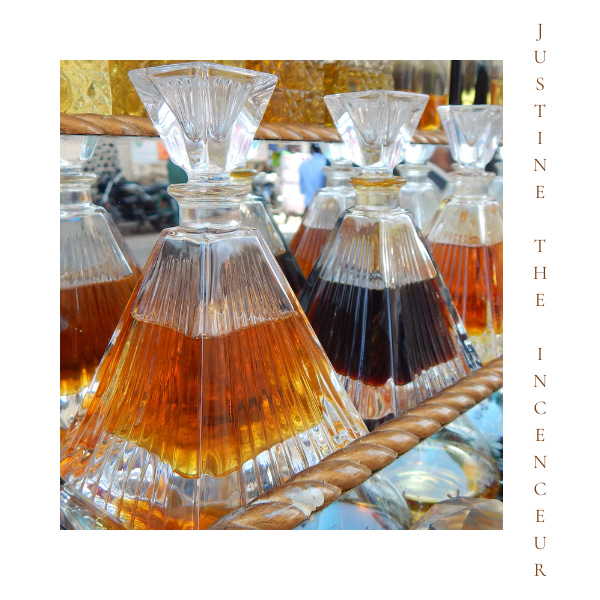
Attars
Traditional attars are highly concentrated, undiluted pure natural perfumes, made through distillation of rare and fragrant flowers, woods, roots, and even soil, into a base of sandalwood oil. This process was traditionally done, and in some places still is, using a deg bhapka, a type of copper still. The distillers load the copper still with roses, jasmine, or another beautifully fragrant flower, wood, root, or spice, and distill them into a collection vessel holding sandalwood oil. Once the process is done, the collected cohabiting oils are aged for years, to ensure a cohesive and smooth smelling attar.
Common Types of Attars
Gulab Attar ~ Rose damascena & sandalwood
Motia/Mogra Attar ~ Jasmine sambac & sandalwood
Rajnigandha Attar ~ Polianthes tuberosa (tuberose) & sandalwood
Kewda Attar ~ Pandanus odoratissimus & sandalwood
Ruh Khus ~ Chrysopogon zizanioides (vetiver) & sandalwood
There are also attars of saffron, soil (mitti), musk, amber, and more.
Modern Attars
Attars, traditionally made using natural materials only, are being created using synthetics. Attars seem to be whatever the perfumer creating them says they are. Sometimes, the attar is a really nice essential oil, or a fabulous new absolute stirred into sandalwood, or vetyver, or a dark patchouli, or they could be a pre-made vintage or antique perfume (Jicky? Shalimar? Chanel No 5?) mixed into sandalwood. There is some alcohol in these old works, even if they are parfum extraits, so a process of evaporation is employed to eliminate any remaining alcohol before they are mixed with the sandalwood.
Some are even partially replacing the more expensive sandalwood oil with less expensive base oils, or with jojoba or fractionated coconut oil to stretch the very expensive sandalwood, and most are not distilling any of it. Perhaps we natural perfumers should find a name to call these modern attars so as not to confuse them with traditionally made attars, so our customers know that what they are buying aren’t true, traditional attars.
Calling a piece of work an ‘attar’ without explaining the process, whether it is the product of a perfumer’s distillation of materials, one into the other, or what’s in it, and whether it is indeed natural, seems deceptive. Full disclosure is required.
Suggested Names for Not-Really-Attar Attars
Heritage Inspired Attars
Neo-Attars
Reimagined Attars
At the end of the day, the definition of an attar only matters to the purists and the customers who either like or dislike the work.